Wednesday, April 24, 2013
Wolf Hall
Wolf Hall by Hillary Mantel is the first of two historical novels centering around the life of Thomas Comwell who was a key player during the reign of Henry VIII. The tale is vividly told and is highly recommended for fans of this period of history (think of the cable show The Tudors). The central drama in this novel is the divorce that Henry seeks from his wife Katherine so that he could be free to marry Anne Boleyn. The decision to pursue the divorce has geopolitical ramifications and ultimately impacts the power of the Roman Catholic Church in England. There are some extremely violent sequences where "heretics" are burned to death. The reader gets a real flavor for life during those times for both the royalty and the commoners. Overall, it was an excellent novel.


Tuesday, February 5, 2013
What I Am Reading Now
I mentioned before that I usually have multiple books going on at once. I can't help it. It is not my style to read one book at a time. I have the book that I read on the train (just finished The Fountains of Paradise by Arthur C. Clarke and I just started From the Earth to the Moon by Jules Verne). There is the book I am reading in my comfy chair in the bedroom - Lincoln by David Donald Herbert. This choice was inspired by seeing the Spielberg movie, but is not the book that the film is based on. Also, I started reading the Hobbit around the time that that movie came out, but it's been sitting in my living room largely unread. It's cold in my living room, so this may contribute to my pokey attitude towards Tolkien. When I find myself somewhere without a book, I pull out my IPhone and read The Adventures of Sherlock Holmes by Arthur Conan Doyle. I am not a huge fan of e-reading. I prefer the tactile quality of a paper book. However, the e-book is fine in a pinch. So, I am in the middle of four books. I bet there are people that are in the middle of many more. Please share the titles that you are juggling. I would love to hear from you.
Sunday, January 13, 2013
This is How You Lose Her
Junot Diaz was recently quoted: "Mother****ers will read a book that's 1/3 Elvish, but put two sentences in Spanish and white people think we're taking over." It is a funny quote. He is reacting to some people's comments regarding his writing style, which peppers Spanish words and sentences throughout his narrative. This style is evident in his latest collection of stories entitled "This is How You Lose Her." These connected stories tell of a Dominican family that emigrates to Northern New Jersey in the late 1970s or early 1980s. The stories are told either in the first or second person and pop with energy, passion and wit. Some of my non-Spanish speaking friends find the "Spanglish" device annoying at times, but appreciate the authenticity that the author brings to the characters' voices. There are some stereotypical depictions of Dominican men as cheaters and the women being either long suffering or opportunistic. However, the protagonist's journey is fascinating. Yunior is clearly an alter ego for the author. His arrival as a child in the US, his assimilation into American society, his adolescent and early adulthood struggles, mistakes and adventures with his family and girls form the emotional core of these stories. At his root, Junot Diaz is exploring what it means to be an American. It is wrong to think about these simply as Latin stories. These are American stories.
Thursday, November 15, 2012
I'm Back!
Hello all - it's been a long while since my last post. I have read so many good books over the past year. Here are some highlights:
John Steinbeck - Tortilla Flat and Cannery Row: These were enjoyable reads but ultimately they are not timeless. These novels are set in California during the depression and include a wide ranging cast of characters of the roustabout and ne'er-do-well variety. All the women are whores and all the men are loafers. It's bleak but with comic touches. There is even a hint of magical realism. It all feels a bit dated, but I enjoyed Reading Cannery Row a bit more.
Kevin Brockmeier - A Brief History of the Dead. This book was a birthday gift from a friend. It was not a novel or a writer that I had ever heard from. I started reading it in part out of a sense of obligation. Boy, I am glad I did. It is one of my favorite books of all time. I don't really want to say much more. If you like end of the world type stories (with no Zombies), this one is for you.
Jack London - The Sea Wolf - This is a really well written sea adventure story. It is action packed and philosophical. If you are looking for a classic novel, I highly recommend this one. I read this on my phone!
Christopher Hitchens - Mortality - This was a powerful meditation on the experience of becoming ill and dying. It is a beautiful short book by one of the great 20th century writers.
Nathan Englander - For the Relief of Unbearable Urges; What We Talk About When We Talk About Anne Frank - Englander is a master of the short story form. His tales are mystical, ancient and modern all at the same time.
Tuesday, July 12, 2011
Anthill
"Anthill" is a Pulitzer Prize winning first novel by the scientist / naturalist, E.O. Wilson. Mr. Wilson wrote the influential "Sociobiology" back in 1975. In recent years, mathematical models have called into question some of the tenets of his theory. Wilson has embraced these revelations as progress in science. Imagine that, a scientist more interested in the truth than in protecting his legacy. Pretty heroic if you ask me.
So I have known him as a science writer and thinker for more than 30 years. The question is, can he write fiction well. The answer is: sort of. The story revolves around a young boy growing up in rural Alabama with a preternatural interest in the insects of the local woodlands. The story throws in a lot about the conflict between conservation and development. There is an interesting thread about a certain strain in Christian extremism that is against conservation on biblical grounds. I did enjoy the exploration of Southern mores and traditions. Wilson, like his protagonist, was reared in the rural South and attends university at an elite Eastern institution. So he knows what he writes about. He captures the cadence and the worldview of these characters perfectly. My major complaint has to do with his plotting. Without giving too much away, this story has "first novel" written all over it.
The best part of "Anthill" (and the reason I totally recommend this book) is the middle section where he describes, in page-turning detail, the daily lives of ants that live in various anthills throughout the local woods. He ascribes to the ants almost human characteristics when describing their activities, reactions and motivations. This section of the book is not to be missed.
On an unrelated note, in my slow but sure quest to read all of Arthur C. Clarke's stories, I read "The City and the Stars". The writing was not great, but the ideas were mind-blowing. Clarke's imagination was a gift to all of us.
Monday, April 25, 2011
Hyperion/Fall of Hyperion
A couple of weeks ago, I finished reading a collection of two novels referred to as The Hyperion Cantos by author Dan Simmons. This collection is comprised of Hyperion and Fall of Hyperion. I mentioned this book last year in one of my early posts. At the time, I said the following:
This is truly one of the greatest "hard" science fiction stories ever. It borrows from Chaucer in that a group of pilgrims (in space) tell each other their life stories. It includes elements of action, noir mystery, political intrigue, religious mysticism, and psychohistory. It is a mind blowing portrait of humanity's imagined future.
I actually started reading this book in October 2009. It took me the better part of 18 months to finish the nearly 1,000 page story. I kept putting it down, not because it was boring, but rather, because I found it overwhelming at times. The comment above about Chaucer really only applies to the first book. The second book explodes with interstellar war between humans, a cold war between mankind and machines, and heartbreaking political decisions that no leaders would wish to face. There is even reference to a confrontation between god-like entities in the far future. The genius of the writer is that he never loses touch with the characters amidst all these heady concepts and far flung plot developments. I really cared about each of these characters and I wanted to follow their stories until the end. The book's finale is very satisfying and will not disappoint. If you are a fan of Dune, 2001: A Space Odyssey, or the Ender books, I recommend Hyperion and Fall of Hyperion.
Thursday, April 14, 2011
Tea in the Sahara
Ok, now I know what that Police song is about. The Sheltering Sky by Paul Bowles is a wonderful post-war novel set in French North Africa. The protagonists are a small band of American travelers. It can be argued that the characters are searching for meaning or inner peace. Some may see this as an existential or even nihilistic novel, devoid of any quest or sense of purpose. What I love about this novel is that it is all of these things: Romantic love story, travelogue, action/adventure, political drama, comedy of manners. The best novels are never about one thing. The writer has a lot to say about Europeans colonials in the wake of WWII. The relationships among the Americans, the Europeans and the "natives" in this book are well observed. I don't want reveal much (or anything) about the plot because one of the true pleasures of this book is not knowing too much. The only other thing I will say is that it starts off a bit slowly, but there is a payoff if you stick with it. And yes, the title of the Police song is explained in the novel.
Thursday, March 10, 2011
Freedom and War of the Worlds
I read two very different books in the last month or so. The first is Freedom by Johnathan Franzen. He was featured on the cover of Time Magazine last year under the caption "Great American Novelist". Not having read any of his other books, I am not in a position to confirm or refute. What I can say is that Freedom is the best book I have read in about two years. The novel tells the story of a Midwestern couple living in St. Paul, and later in Washington, DC. The story is told from differing vantage points, jumping back into their youth and forward into their dissolution and ultimate reunion. What makes this novel great is Franzen's ability to create such three-dimensional, emotionally rich characters. You really get inside the heads of Patty and Walter Berglund. You see them endure challenging (and at least one nightmarish) relationships in high school and college; you see them try to fit into their gentrifying urban neighborhood as a young married couple; you see them struggle to deal with their rebellious son; you see them drift apart through the years; isolation leads to betrayal, which leads to disintegration. Eventually an equilibrium is reestablished. It is all very real and you cannot look away. I was actually sad that the story came to an end, and after nearly 600 pages, that is saying a lot.
The other book I just finished is War of the Worlds by HG Wells. Everyone knows the story thanks to all the movie versions and variations. However, how many of you have ever actually read the original? The language is a bit archaic. However, there is a lot of fast paced action. Did you know that the Martians fed off of human blood? Pretty awesome stuff. The idea that the Martians would be ultimately felled by bacteria is an elegantly simple concept that hasn't lost its power over 100 years later. There are better books out there that deal with apocalyptic scenarios. War of the Worlds is a classic that I recommend only to SciFi completists. The rest of you can rent the Tom Cruise/Steven Spielberg version or watch Cloverfield.
Monday, January 3, 2011
Mr. Peanut and Richard Matheson
I got a little behind on my reading over the past month or so. Over Christmas break I read a new novel by Adam Ross called "Mr. Peanut". This is Ross' first novel. The story (sort of) revolves around the relationship between a dysfunctional married couple, Alice and David. Alice is deathly allergic to peanuts. When she is found dead in her apartment with a throat full of Planters Peanuts, the police take a hard look at her husbands' allegation that his wife committed suicide. The two detectives that are investigating the death are convinced that David killed his wife and one of the detectives enlists the help of a serial killer named Mobius to help him crack the case. The detectives themselves have very complicated (and potentially deadly) relationships with their own wives. The relationship between Dr. Sam Shepherd (the inspiration for the TV show and movie, The Fugitive)and his wife is a central part of this book. I enjoyed reading the book, but, ultimately, I did not feel that the various narrative threads coalesced.
I also read a bunch of short stories by Richard Matheson, the great SF writer best known for his novel "I am Legend" and for his work on The Twilight Zone (he wrote many of the classic episodes). I was inspired to read some of his stories after Amy and I watched the film The Box, which was based on his short story called "Button, Button". The premise of the movie and the story is that a stranger gives a married couple a box. If they push the button, they get a large sum of cash and someone they don't know dies. In both the movie and the story, the woman pushes the button (Amy took exception because women are always portrayed as the bad actors: Eve, Lady Macbeth etc. I think that in this case the woman was simply acting decisively). Of course, nothing good comes of this choice. If she were better read, she would have known this. Anyway, Matheson is really good at creating tension and maintaining it throughout. Sometimes the final twists are lame, but more often than not, the stories are very satisfying. If you are a fan of Steven King's excellent short story collection "Nightshift", you will like Matheson's stories. The stories are not gory, but suspenseful and clever.
Tuesday, November 9, 2010
The Unbearable Lightness of Being
I recently met two different people, who upon seeing me reading The Unbearable Lightness of Being, remarked that it is one of their favorite books. It is a very complex philosophical book with an eliptical plot. I won't try to explain the plot other than to say the events of the story take place during the time of the Prague Spring (the period of cultural liberalization in Czechoslovakia in 1968). The story is quite erotic. The protagonist, who I believe is in his early 40s, has slept with over 200 women in his lifetime. He shags a fair number of these women during the course of the book. Kundera's writing reminded me of Nabakov. As good as this book is, I would not say it is among my favorites. See the movie instead.
Wednesday, October 6, 2010
Two Dystopian Visions
I recently read Super Sad True Love Story by Gary Shteyngart. This novel takes place in NY and Europe in the not too distant future and paints a pretty dark picture of where American values are heading. The US is in sharp economic decline and gets bought out (literally) by the new powers, China, Saudi Arabia and Norway (Norway? really?) In Shteyngart's vision, the social networking/information technology trend has gotten to the point where no information about each citizen is private any longer. Everyone has IPhone-like devices called apparats. Information about each person, ranging from credit score to triglyceride levels, is available to anyone and everyone instantaneously. Your credit score flashes from "credit poles" as you walk past them. The enemies of the state are not terrorists or communists, but rather, Low Net Worth Individuals. The book is satire and the premise is over the top. However, it is close enough to the top that you can imagine all these things coming to pass. This is the true brilliance of this book. Shteyngart is making a scathing comment about the surrendering of our privacy and obsession with social status and possessions. It is heavy stuff, but his use of humor keeps things from bogging down and getting sanctimonious. I give this hipper-than-thou tome three out of four stars.
The other book I recently finished is the Hunger Games by Suzanne Collins. It is a teen novel (with no wizards or vampires). I mentioned this book in a prior entry so I won't say much more about this book except that I highly recommend it to fans of science fiction. If you liked A Wrinkle in Time as a kid (or adult), you will like this book and will want to read the two sequels.
I participated in a book discussion of the Hunger Games with a number of adults and pre-teens. The comments and observations from the children were truly fascinating. They really understood some of the nuances that lay beneath the surface of the story.
Tuesday, August 10, 2010
She Blinded Me with Science
The other day, my friend Pamela told me that she is reading Stephen Jay Gould's The Mismeasure of Man for one of her classes. I thought I had read it, but it turns out the book I actually read was Carl Sagan's The Dragons of Eden. My confusion was because the books covered similar topics (the evolution of human intelligence) and were published close in time.
I confess, I am kind of a science geek. I read science magazines, newspaper articles and books with great interest. Recently, I read the nearly 600 page biography of Einstein by Walter Isaacson. It was totally riveting, both the personal and the science. What Issacson's book does well is show how scientific knowledge (and the pursuit of it) fits into the broader context of history and culture. Einstein's theories literally changed the world. They ushered in the atomic age and shifted our understanding of the basic laws of nature. The thing that people don't remember is that he spent decades in a fruitless quest for a grand unified theory bridging the very large (cosmology) and the very small (quantum physics). That quest still continues by others. He also rejected much of the new physics that followed his revolutionary ideas of the first two decades of the 20th century. He was a true celebrity in the way that say a Bill Clinton is. He attracted a crowd wherever he went and people clambered to hear him speak.
Carl Sagan was like that for me when I was a teenager. His books, and particularly, his TV show Cosmos really opened my eyes to the wonder of the universe and helped me become a critical thinker. Sagan really showed me the romantic nature of science. My other hero during these years was Arthur C. Clarke, the science fiction writer. When I was 15 years old, I joined an organization called the Planetary Society. All you had to due was pay annual dues, and you were in. One day, they sponsored a lecture by Carl Sagan. My mon and I attended the lecture. Seated in the front row was none other that Arthur C. Clarke. The man lived in Sri Lanka, but here he was in NYC, not but 50 feet away. Before the lecture started, many of the audience members queued up and got Mr. Clarke's autograph. I didn't have anything for him to sign, so I did not get in the line. I have always wished that I would have gotten in line and simply shaken his hand and thanked him for all the great stories. You don't often get a chance to thank your heroes, and to this day, I wish I had. Isaac Asimov was there too, but I didn't care about him in those days.
Thursday, July 22, 2010
The Young Adult Novel
I host an annual book discussion at the local community garden where I volunteer. This year, I decided to pick The Hunger Games by Suzanne Collins. This is a young adult novel that is all the range among the tween set and beyond. I think many adults are put off by the young adult novel, but they can be great books that are enjoyed by all ages. For example, I recently reread A Wrinkle in Time by Medeline L'Engle. I would rate that a great novel without qualification.
The Hunger Games presents a post-apocalyptic future where the country is divided into a number of districts. Each district has to put forth children to do battle in a gladiator ring. The plot points and the themes are totally up my alley. My hope for this novel is that, like Animal Farm or Lord of the Flies, the conceit of the plot is merely a launching pad to explore deeper truths. We shall see whether this novel is simply this year's fad, or whether it resonates enough to be remebered and read by future generations. Stay tuned.
Sunday, July 11, 2010
Gilead
On Saturday, I finished reading Gilead by Marilynne Robinson. The novel takes place in 1956 in a small town in Iowa. The conceit of the book is that it is a long letter written by a 76 year old Calvinist pastor (John Ames) to his young son. John Ames is in the last stages of heart disease and will not be around to teach his son the moral lessons that a father would impart to a child over time. In the letter, written over a period of several weeks, Ames writes to his son about his own family history. Ames' grandfather, a young man living in Maine in the 1830s, had a vision of Christ bound in chains. He decided to move to Kansas, which was still a territory, in order to fight for Kansas' admittance into the Union as a free state. Ames' grandfather's tactics in the support of abolition includes violence. This is a hell of a thing, considering that the grandfather is a preacher himself. Ames' letter to his son continues the story of his grandfather, his father and that of his best friend's wayard son, who has returned home after being away for many years. The book is a lyrical exploration of the concepts of forgiveness, faith and grace. The story of the prodigal son permeates throughout the book.
When Ames sets to telling the story of his family, the book is really engaging. However, the more philosophical musings can bog down the reading. This is not a quick read, but it is worthwhile.
Thursday, June 17, 2010
Birthday Reflections
I just added about two thousand pages to the great unread collection of books that I hope to eventually get to. This week, I completed another revolution around the sun. In recognition of this, Amy presented me with two books: 1) Christianity, The First Three Thousand Years by Diarmaid MacCulloch and 2) 2666 by Roberto Bolano. I am very excited to receive these books. The Christianity book was favorably reviewed in the NY Times Book Review section. The history of Christianity is essentially the history of western civilization. There are serious gaps in my historical knowledge that I am interested in discovering: what was it like for the early Christians to be persecuted by the Romans? What led to the schism between the eastern and western churches? What specifically happened during the crusades? These issues are relevant today as we see people of faith being persecuted around the world and we see people of faith practicing intolerance and persecution. This book will likely sit on my bedside table and take a while to finish. I have to finish the other book on my bedside first, The Cuba Reader. As for 2666 (see my post from April), I am really looking forward to reading this novel. I will start it immediately after finishing Gilead (and Hyperion and The Lost Symbol).
I have come to the point in my life where I realize that I will not be able to read all the books that I plan to. There is a serious backlog of books I want to read and I keep adding to it. But that's OK. I am simply going to focus on enjoying the books that I do read. It's not like I win a prize at the end. That being said, I want to make every choice count. If I am not enjoying a book, I will drop it and move on.
Tuesday, June 8, 2010
Dan Brown, (Not So) Guilty Pleasure
About 5 years ago, I started a book club at work with the idea that we would read bestsellers of the potboiler variety. I had been in a book club that read a lot of different things, but most of what we read was literary/artsy/highbrow. I wanted to read books that were similar to the types of books that were popular when I was a kid: Jaws, The Godfather, The Boys from Brazil, Looking for Mr. Goodbar; books that didn't necessarily have anything profound to say, but were riveting pageturners.
The first selection for this office book club was The DaVinci Code by Dan Brown. This was the most popular book on the planet at the time. Everyone had read it or was reading it. Is there anyone who hasn't read it? The story is bereft of any kind of literary ambitions, but boy what a hell of a ride! The story grabs you from the first chapter and doesn't let go. It is a masterful blend of history / religion / suspense / mystery. Yes, it almost reads like a movie, and, incidentally, it was much better than the movie version that later came out.
Alas, the great potboiler experiment did not last. The next office book club selection was The Kite Runner. No one wanted to read John Grisham or Sara Paretsky. We had reentered the world of deep characters and emotional journeys. Oprah would have been proud. However, this didn't stop me from reading Angels and Demons on my own. This book was published before The DaVinci Code and is better. It was even more suspenseful and quicker paced. The movie was mediocre (why are the movie versions of these terrific books so average?) Right now, I am in the early part of The Lost Symbol, the third in Dan Brown's Robert Langdon series. I totally think of Tom Hanks as the protagonist as I turn the pages.
Often, when I reflect on what I like about certain writers or books, I point to the prose style or the development of the characters. Sometimes the stories give me new insights on life. I am often enriched by the great books that I read. However, what I enjoy about these Dan Brown novels is that I am always thoroughly entertained, even if I am not edified. But that is ok. I can always read Umberto Ecco (Dan Brown's literary counterpart) for that.
Saturday, May 29, 2010
Every Painting Tells a Story Don't It

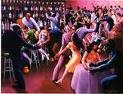
...well perhaps every painting does not tell a story, but many do. I recently visited the Art Institute of Chicago. A long time ago I figured out that the best way to experience the "Toot" is to try to see a little bit during each visit. The collections are so expansive and varied that trying to take it all in at once is impossible and leads to burnout. My best experiences at the Toot have been when I have popped in for a couple of hours and have focused on no more that two or three areas. Every time I go, I discover something new or see something again with a fresh perspective.
On my most recent visit I discovered the artist Archibald Motley. He was part of the Harlem Renaissance and was known for his paintings of African American nightlife. In fact, the painting that caught my attention is titled "Nightlife". The museum caption for this painting lauds Motley's use of color and artificial light. The caption compares Motley's use of light in Nightlife to another painting located in the next room, Edward Hopper's iconic "Nighthawks". What drew me into both of these paintings were the scenes themselves. Both of these paintings are inhabited with strong characters and suggested stories. Look at the scene at the bar in Nightlife. There are two women sitting at the bar dressed to kill and having a smoke. One of the women is looking intenesly at a man standing a few feet away, who, in turn, is looking away from the woman and has his arm outstretched towards another woman who is dancing with another man. The woman at the bar is looking at the man with what may be described as exacerbation or intense annoyance. Maybe he is her man who is trying to make time with another woman. Maybe she is obsessed with the man who doesn't even know how she feels. Towards the middle of the painting there is another man sitting alone at a table, smoking and having a drink with his eyes closed. He is surrounded by people dancing and in happy revelry. He looks like the saddest and loneliest person in the word. He may have lost someone close and dear to him through some foolish action of his.
Nighthawks presents 4 people at a diner late at night. A man and a woman sit together; another man sits away from them with his back to the viewer; the diner employee looks like he is preparing something or putting something away. It is unclear if the characters are acquainted with each other, but there is definitely a tension in the scene. The couple may be on the verge of a split or maybe they are just bored with each other. Does the mysterious third diner patron bear them any ill will? Is the employee part of their lives in some way?
Unlike reading a text narrative, these type of paintings allow the viewer to construct his own story within the context of the scene presented by the artist.
Tuesday, May 25, 2010
Magazines and Wilson
Amy and I receive a slew of magazines. Some are weekly, biweekly, monthly and quarterly. This is in addition to a daily newspaper. Aside from contributing to global deforestation (I still like the physical copy versus the on-line versions), the magazines present a lot of text for me to read in addition to the books that I read. I enjoy reading magazines (mostly of the non-fiction variety) in a different way that I enjoy reading books. Magazines, with their glossy photos and snappy text layouts, are often inviting to read, but do not compel me to keep around for any long period of time. In fact, my rule of thumb is that I only keep a particular magazine around until the next issue arrives. I them pass it along to a friend or recycle. If I didn't get around to reading the magazine, too bad. I get rid of it and move on to the next issue. This helps me manage the pile-up of unread material. There are enough books that I want to get to before I turn to dust. The last thing I need is having to make time to read the Time Magazine cover story about Afghanistan from March that I never got to. If I really want to read it, I have a whole week to find the time.
A friend of mine takes a different approach. She keeps the zines around so that she has more choices when she has the time to read. I guess I am hard-wired differently. I can be a lazy reader. If I did not impose the deadlines on myself, the zines would pile up. What my friend views as having more choices by keeping old zines around, I would view with a creeping anxiety as the piles of unread material gets larger.
On a different note, I just read Daniel Clowes latest graphic novel, Wilson. My friend Jimmy loaned it to me. This is the first book that Clowes has written which did not originally appear in one of his comic books. In other words, the material was first published graphic book format. Clowes is at the top of his game. He has really matured from his early punkier days. Wilson is a middle aged man living in Oakland who has no real connections with other human beings. He tries very hard to force square pegs into round holes and the results are hilarious and depressing. Kudos to Clowes for hitting one out of the ballpark. My only regret is that I read the whole thing in about an hour. Thanks Jimmy!
Thursday, May 20, 2010
War Without End
Sorry for the hiatus. I just finished a book entitled The Body and The Blood. It is a great book with a terrible title. It is a non-fiction book written by Charles Sennott, a Boston Globe reporter who lived in Jesusalem for 4 years during the late 1990s/early 2000s. In his book, he documents the fragile state of the Arab Christian communities in Israel, Palestine, Lebanon and Egypt at the turn of the third millennium. He uses the conceit of travelling to the places where Jesus was said to have lived or visited during his life (and resurrection). This book was given to me by a friend at my church and I highly recommend it to anyone that would like to get a sense of how the three Abrahamic religions coexist in this fractious region. I was totally riveted reading the stories of Palestinian life under occupation and the tensions between the Arabs of Christian and Islamic faiths.
The Arab/Israel conflict is not what I would call light reading. There is probably a library full of books on the history and politics of the region. Much of it is written from the Israeli perspective. Even the works that are sympathetic to the Palestinian cause are often written by Israelis or by Americans. Very few mainstream books available in the west are written by Arabs, but there are some. In order to get a deep and nuanced understanding of the conflict one must read multiple books with different perspectives. Here are some of the better books that I have read:
Out of Place by Edward Said - This is a memoir of growing up in the Middle East by the now deceased Columbia University professor. Said is the most eloquent of Arab writers.
From Beirut to Jerusalem by Thomas Friedman - This is probably the best overall book I have read regarding the region. Friedman was the New York Times correspondent in Lebanon in the early 1980s during the Israeli invasion of Lebanon. He then became the Jerusalem correspondent just in time for the Intafada in the late 1980s.
Jerusalem in the 20th Century by Martin Gilbert - This is a decidedly pro-Israel book. Gilbert's account of the civil strife in Jerusalem leading up to the 1948 is gripping.
Six Days of War by Michael Oren - This book provides great detail regarding the 1967 war where Israel routed three large Arab armies. Israeli and Western writers have never been able to access the Egyptian, Syrian and Jordanian archives to present their side of the political and military story in any real depth. Until then, we can only wonder.
Peace Not Apartheid by Jimmy Carter - President Carter was unfairly labeled an anti-Semite for writing this book. He is extremely critical of Israel's policies towards the Palestinians. This book also contains his recollections of the Camp David meetings when he helped negotiate the peace between Egypt and Israel.
What Went Wrong by Bernard Lewis - This short book discusses why the Islamic world, once a beacon of progress, was eclipsed by the West in the last three centuries.
There are so many more books. I hope you all read one of these selections. We can then meet at a local hookah bar and discuss.
Friday, April 30, 2010
Peanuts
When I wrote about graphic novels earlier this month, I should have also mentioned comic strips. Although strips initially appear in newspapers, they are often compiled and released in book form. In my late teens and early 20s, I remember The Far Side and Bloom County being popular. I have to admit that I don't pay much attention to contemporary comic strips, and neither do my children. This is too bad as I imagine there must be some well drawn and imaginative strips being produced these days.
The other day I read that licensing rights for the Peanuts gang was sold to a company that manufactures Joe Boxers (among other things) for $175 million. This reminded me how much I used to love Charlie Brown, Lucy, Linus, Sally, Shroeder, Pig Pen and Snoopy. When I was in early elementary school, my mother bought me a number of Peanuts-related books. I still own them. I pulled then off the shelf and read through some of them for the first time in decades. They still make me chuckle. The strips aren't as lacerating as Doonsbury or as clever as The Far Side, but Charles Shultz perfectly captured the innocense of childhood. These characters relate to each other without any of the worries of the adult world. In fact, there are no adults featured at all. Yet, their observations display a wisdom that is both believable and unexpected.
A friend of mine recently told me that the early Peanuts strips were drawn differently that the later ones. He mentioned that Linus was drawn as a toddler. I went to my bookshelf and found that the earliest of my books, The Wonderful World of Peanuts, was published in 1952. Sure enough, the characters look younger and, yes, Linus is a toddler. One of the central characters is those days was Shermy. Does anyone remember Shermy? I do because I played him in 4th grade in a school play. These strips are a joy to read and they totally hold up.
Subscribe to:
Posts (Atom)